


Your period comes like clockwork every month. You’ve been tracking your cycle, eating well and trying for a baby. Yet month after month, the pregnancy test shows a single line. If this sounds familiar, you’re not alone. Many couples we meet in Kolkata say the same thing: “My periods are perfectly regular, so why am I not getting pregnant?”
A regular period is a good sign. It usually means your hormones are working in a fairly balanced way. But it is only one piece of the fertility puzzle. Getting pregnant depends on several other things happening correctly, in both partners, at the right time.
In this blog, Dr. Arindam Rath, Fertility Physician and IVF Consultant in Kolkata, explains why regular periods don’t always mean easy conception, what the hidden causes can be, and when it is time to get checked.
Why a Regular Period Doesn’t Guarantee Pregnancy?
A period simply means the lining of the uterus has shed. It tells us your hormones are cycling. It does not confirm that everything needed for pregnancy is in place.
For a pregnancy to happen, many steps must go right in the same cycle:
• The ovary must release a healthy, mature egg (ovulation).
• The fallopian tube must be open and able to pick up the egg.
• Healthy sperm must reach the egg at the right time.
• The egg and sperm must fertilise and form a healthy embryo.
• The embryo must travel to the uterus and implant in a receptive lining.
A problem at any one of these steps can stop a pregnancy, even when your cycle is perfectly on time. Interestingly, studies of healthy women show that roughly 10 to 18 percent of regular cycles are anovulatory. That means bleeding happens, but no egg is released.
The good news is that most of these issues can be found with simple tests, and many can be treated.
How Long Should You Try Before Seeing a Doctor?
Even for a completely healthy couple, the chance of conceiving in any single month is limited. Most couples conceive within a year of regular, unprotected intercourse. So one or two unsuccessful months is not a reason to panic.
But waiting too long can also cost valuable time. As a general rule:
• Under 35 years: See a fertility specialist after 12 months of trying.
• 35 years or above: See a specialist after 6 months of trying.
• Above 40 years: Get evaluated right away.
You should also seek help sooner if you have very painful periods, a history of pelvic infection or surgery, known PCOD or thyroid problems, previous miscarriages, or if your partner has a known health issue that may affect sperm.
According to the World Health Organization, about 1 in 6 people experience infertility at some point in their lives. Seeking help is common, and it is nothing to feel embarrassed about.
Hidden Female Causes Behind “Regular Periods but No Pregnancy”
Here are the most common reasons we find in women who have regular cycles but are unable to conceive.
1. Ovulation problems you can’t see
You may bleed every month without releasing an egg, or the egg may be released but not be of good quality. A weak ovulation can also produce too little progesterone, the hormone that prepares the uterus for implantation. A follicular study (folliculometry) can show exactly what is happening in your ovaries.
2. Blocked or damaged fallopian tubes
The tubes are where the egg and sperm meet. Past infections, tuberculosis (still common in India), pelvic surgery or endometriosis can block or damage them. Blocked tubes usually cause no symptoms, and periods stay completely normal.
3. Endometriosis
In endometriosis, tissue similar to the uterine lining grows outside the uterus. It can cause painful periods, pain during intercourse and scarring around the ovaries and tubes. Some women have mild symptoms, or none at all, and still struggle to conceive.
4. Uterine factors
Fibroids, polyps, a septum or scar tissue inside the uterus can make it harder for an embryo to implant. Periods may be regular, though sometimes heavier than usual.
5. Thyroid and prolactin imbalance
Even mild thyroid problems or slightly raised prolactin can disturb ovulation and implantation. These are easy to check with a blood test and are very treatable.
6. Lower ovarian reserve
Every woman is born with a fixed number of eggs. With age, both the number and quality of eggs fall, especially after 35. Your periods can stay regular even when your egg reserve is falling. An AMH blood test and an ultrasound count of follicles help us assess this.
Don’t Forget the Male Partner
This is the part many couples overlook. When periods are regular, families often assume the problem must be “somewhere else” in the woman. In reality, a male factor plays a role in about half of all infertility cases, either alone or alongside a female factor. Common male factors include:
• Low sperm count
• Poor sperm movement (motility)
• Abnormal sperm shape (morphology)
• Varicocele (swollen veins around the testicles)
• Hormonal problems
• Lifestyle factors such as smoking, alcohol, obesity, heat exposure and stress
Most men with low sperm quality feel completely healthy and have no symptoms. A simple semen analysis is quick, painless and affordable. It should be one of the very first tests in any couple trying to conceive, ideally done at the same time as the woman’s evaluation.
Timing and Lifestyle: Small Things That Matter
Sometimes there is no medical problem at all. The issue is simply timing or day-to-day habits. Missing the fertile window. An egg survives only about 12 to 24 hours after release, while sperm can live for a few days. The best chance of pregnancy is in the few days before and on the day of ovulation. In a 28-day cycle, this is usually around day 12 to 16, but it shifts if your cycle is longer or shorter. Busy work schedules, travel and stress often mean couples miss this window without realising it.
Lifestyle factors that can affect fertility in both partners include:
• Being significantly overweight or underweight
• Smoking and alcohol
• Long-term stress and poor sleep
• Very intense exercise
• Uncontrolled blood sugar or diabetes
• Excess caffeine
Small, steady changes can make a real difference. But lifestyle changes should not delay a proper medical check-up if you’ve been trying for a while.
What If Every Test Comes Back Normal?
Sometimes both partners are tested and every report looks normal: regular ovulation, open tubes, healthy uterus, normal semen analysis. Yet pregnancy still doesn’t happen. This is called unexplained infertility.
The word “unexplained” can feel frustrating, but it does not mean “untreatable”. It usually means the problem lies in something current tests cannot easily measure. Examples include egg quality, how well the egg and sperm fertilise, or how the embryo implants.
Many couples with unexplained infertility go on to conceive with the right treatment plan. Options often start with timed ovulation induction or IUI, and move to IVF if needed.
Fertility Tests That Help Find the Answer
A proper fertility evaluation looks at both partners together. Depending on your age and history, Dr. Arindam Rath may recommend some of these tests:
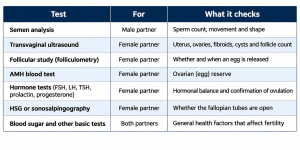
The goal is always the safest, simplest and most effective path for your situation.
When to Consult DOCTOR?
Regular periods are a good starting point, but they are not the full story. If you have been trying for a year (or six months if you’re over 35) without success, it’s time to look deeper. The earlier the cause is found, the more options you usually have.
Frequently Asked Questions
1. Can I be infertile if my periods are regular?
Yes. Regular periods show that your hormones are cycling, but problems with egg release, egg quality, the fallopian tubes, the uterus or sperm can still prevent pregnancy.
2. Can I have a period without ovulating?
Yes. This is called an anovulatory cycle. Bleeding still happens, but no egg is released. A follicular study can confirm whether you are ovulating.
3. Should my husband get tested even if I’m the one trying to conceive?
Absolutely. A male factor contributes to about half of infertility cases. A semen analysis is simple and should be done early.
4. Do I need IVF if I’m not getting pregnant?
Not necessarily. Many couples conceive with simpler treatments like ovulation induction or IUI. IVF is advised only when the cause or your age makes it the best option.
5. Does stress stop pregnancy?
Stress alone rarely causes infertility, but long-term stress can affect your cycle, sleep and sex life. Managing it helps, but it shouldn’t replace a medical evaluation.
Disclaimer: This blog is for general awareness only and does not replace a personal medical consultation. Please consult a qualified fertility specialist for advice specific to your situation.