
Preloader

Contacts

Mahendra Roy Lane, PS Pace – II, By pass Connector between Topsia more, 1/1A, JBS Haldane Ave, Gobra, Kolkata, West Bengal 700046
Book Appointment

Book Appointment

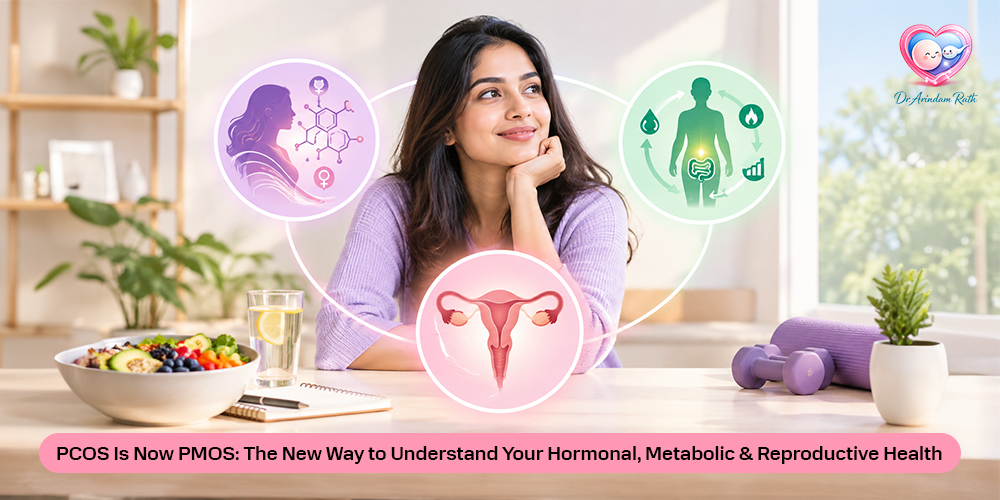
    PCOS Is Now PMOS: The New Way to Understand Your Hormonal, Metabolic & Reproductive Health

    It Was Never Just About Ovarian Cysts

    For years, women have heard the term PCOS, or Polycystic Ovary Syndrome, and often associated it with irregular periods, weight gain, acne, unwanted hair growth or difficulty getting pregnant. But PCOS was never simply a problem of the ovaries.

    It can affect hormonal health, ovulation, metabolism, fertility, emotional well-being and long-term health.That broader understanding has now been reflected in an important terminology change.

    In May 2026, the international evidence-based guideline introduced PMOS, or Polyendocrine Metabolic Ovarian Syndrome, as the new name for the condition previously known as PCOS. The change is intended to better communicate that the condition involves much more than ovarian appearance.

    So, if you have been searching for PCOS Treatment in Kolkata, wondering about PCOS and Fertility, or simply trying to understand what your diagnosis means, there is an important message to remember:

    Your ovaries are only one part of the picture. You are the whole picture!

    Why Has PCOS Been Renamed PMOS?

    The word “polycystic” has often led women to believe that cysts are the central problem.
    That can create a common misconception:
    “I have PCOS because I have cysts on my ovaries.”
    But that is not how the condition is diagnosed.

    The international guidelines recognise several different features, including:

    • Hyperandrogenism, meaning elevated androgen levels or clinical signs such as excess hair growth or acne
    • Ovulatory dysfunction, often reflected through irregular menstrual cycles
    • Polycystic ovarian morphology on ultrasound
    • In adults, anti-Müllerian hormone can also be used as an alternative to ultrasound within the appropriate diagnostic pathway.

    Importantly, a woman with irregular periods and hyperandrogenism may not need an ovarian ultrasound to establish a diagnosis of PCOS.

    That is why the new term Polyendocrine Metabolic Ovarian Syndrome is significant.
    It shifts attention from simply asking: “What do the ovaries look like?” to asking: “What is happening throughout the woman’s hormonal, metabolic and reproductive health?”

    PMOS Is More Common in India Than Many Women Realise

    PCOS is not a rare condition.

    A large Indian cross-sectional study involving 9,824 women aged 18 to 40 years found a weighted national prevalence of 7.2% using the older NIH diagnostic criteria and 19.6% using the Rotterdam criteria. The difference demonstrates how prevalence estimates can change depending on the diagnostic criteria used.

    An earlier systematic review and meta-analysis of Indian studies found a pooled PCOS prevalence of approximately 11.3% using Rotterdam criteria, although the researchers highlighted significant differences between studies and the need for more consistent diagnostic approaches.

    The newer Indian study also revealed why PCOS should not be viewed as merely a fertility or menstrual problem.

    Among women with PCOS in that study:

    • 43.2% had obesity
    • 91.9% had dyslipidemia
    • 24.9% had metabolic syndrome
    • 32.9% had non-alcoholic fatty liver disease
    • 8.3% had hypertension
    • 3.4% had diabetes

    These findings do not mean every woman with PMOS will develop these conditions. But they highlight why comprehensive health assessment matters.

    PMOS is not simply about periods. It is about the bigger health picture.

    What Does PMOS Actually Affect?

    The symptoms of PMOS can look very different from one woman to another. One woman may primarily experience irregular periods. Another may struggle with acne or unwanted hair growth. Another may have difficulty conceiving. Someone else may have significant metabolic concerns without dramatic reproductive symptoms.

    Common features can include:

    a. Irregular Periods

    Changes in ovulation can lead to periods that are delayed, infrequent or unpredictable.
    Irregular cycles should not simply be dismissed as “normal for me”, particularly when they persist.

    b. Excess Hair Growth

    Higher androgen activity can contribute to unwanted facial or body hair.

    c. Acne and Oily Skin

    Hormonal changes may contribute to persistent acne, particularly when it occurs alongside other signs of androgen excess.

    d. Hair Thinning

    Some women experience female-pattern hair thinning or increased hair loss.

    e. Weight and Metabolic Changes

    PMOS can be associated with insulin resistance, changes in lipid levels and other metabolic concerns. Importantly, PMOS can occur in women across different body sizes. A woman’s weight alone cannot confirm or rule out the condition.

    f. Difficulty Conceiving

    Ovulatory dysfunction can make conception more difficult for some women.

    This is where PCOS and Fertility become closely connected.

    PCOS and Fertility: Can You Still Become a Mother?

    One of the first questions many women ask after a PCOS diagnosis is:

    “Will I be able to have a baby?”
    The answer is reassuring.

    PCOS does not mean that pregnancy is impossible.

    The challenge is that irregular ovulation can reduce the frequency with which an egg is released, making conception more difficult for some women.

    That does not mean motherhood is out of reach.

    Depending on the individual situation, fertility care may involve lifestyle optimisation, ovulation-inducing medication, management of metabolic or hormonal concerns, or assisted reproductive techniques when appropriate.

    A fertility specialist may assess factors such as:

    • Menstrual and ovulation patterns
    • Hormonal profile
    • Ovarian function
    • Metabolic health
    • Semen parameters of the male partner
    • Other factors that may influence conception

    The important point is that PCOS Pregnancy Treatment should never be a one-size-fits-all formula. The right approach depends on the woman, her reproductive goals and the factors affecting conception.

    Why Lifestyle Is an Important Part of PMOS Management

    There is no single lifestyle plan that works identically for every woman with PMOS. However, healthy lifestyle habits remain an important part of PCOS Management. It extends to:

    a. Nutrition

    A balanced eating pattern that includes adequate protein, fibre, vegetables, whole foods and appropriate healthy fats can support overall metabolic health. The goal should not be extreme dieting.It should be creating sustainable habits that support the body over the long term.

    b. Physical Activity

    Regular physical activity can support cardiovascular fitness, metabolic health and insulin sensitivity.The best exercise is often the one you can maintain consistently.

    c. Sleep

    Poor sleep can affect energy, mood and metabolic health.Creating a consistent sleep routine can therefore be an important part of comprehensive PMOS care.

    d. Stress and Emotional Well-being

    PCOS can affect more than physical health.The emotional impact of acne, hair changes, weight concerns, irregular periods and fertility difficulties can be significant.That is why modern PCOS Management should consider quality of life and psychological well-being alongside physical symptoms. As such, the international guideline specifically emphasises emotional well-being and quality of life as important components of care.

    Hormonal Imbalance Treatment Should Begin With Understanding the Cause

    The phrase “hormonal imbalance” is often used very casually. But hormonal symptoms can have different causes.Irregular periods, acne, hair growth or difficulty conceiving do not automatically mean that a woman has PMOS. A proper assessment may involve menstrual history, physical examination, relevant hormonal testing and metabolic evaluation. Other conditions that can produce similar symptoms may also need to be excluded. That is why Hormonal Imbalance Treatment should never be based simply on an internet symptom checklist.

    Diagnosis comes before treatment.

    And treatment should be based on the woman’s symptoms, health risks and reproductive goals.

    PMOS and Pregnancy: What Changes?

    For women planning pregnancy, PMOS requires a slightly different focus.
    The goal is not simply to make periods regular.
    The focus is on understanding whether ovulation is occurring, identifying other fertility factors and optimising overall health before conception.

    Pregnancy itself can also require appropriate monitoring because women with PMOS may have increased risks of certain pregnancy complications.

    This is why preconception counselling can be valuable. Instead of waiting until pregnancy occurs to address every concern, women can discuss their reproductive and metabolic health beforehand.

    Planning ahead can make fertility care more informed and personalised.

    When Should You Consult a PCOS Specialist in Kolkata?

    You do not have to wait until fertility becomes a problem to seek medical advice.
    Consider consulting a PCOS Specialist in Kolkata if you experience:

    • Persistently irregular or absent periods
    • Excess facial or body hair
    • Persistent hormonal acne
    • Unexplained hair thinning
    • Difficulty with weight or metabolic health
    • Difficulty conceiving
    • A previous diagnosis of PCOS
    • Concerns about ovulation
    • PCOS-related fertility concerns

    If you are planning pregnancy, an early consultation can help identify whether ovulation and other reproductive factors need attention. And if conception has already been difficult, consulting a Fertility Specialist in Kolkata can help determine whether PCOS is the only factor involved or whether other fertility issues also need to be evaluated.

    Does PCOS Always Require IVF?

    No. This is another common misconception. Having PCOS does not automatically mean that you need IVF Treatment in Kolkata. Many women with PCOS conceive without IVF, depending on their individual circumstances. If ovulation is the primary issue, a fertility specialist may first consider appropriate ovulation-focused treatment. If other factors are present, assisted reproductive techniques may become part of the treatment plan.
    IVF may be considered when clinically appropriate, but it should not be viewed as the automatic next step after a PCOS diagnosis.

    Treatment should match the problem, not simply the diagnosis.

    What Has Really Changed From PCOS to PMOS?

    Perhaps the biggest change is not the acronym. It is the way we look at the condition.
    PCOS encouraged many people to focus on:

    • Periods.
    • Ovaries.
    • Cysts.
    • Fertility.

    PMOS encourages a broader conversation around:

    • Hormones.
    • Ovulation.
    • Metabolism.
    • Mental well-being.
    • Long-term health.
    • Fertility.

    The new terminology does not mean that everything previously called PCOS has suddenly become a different disease.
    Rather, it reflects a broader understanding of the same complex condition and its many dimensions. The 2026 international guideline continues to build on established diagnostic criteria while placing greater emphasis on metabolic, cardiovascular, psychological and reproductive health.

    PMOS Does Not Define Your Future

    A diagnosis can feel frightening when you do not know what it means. But PMOS does not determine whether you will become a mother. It does not define your appearance. It does not determine your femininity. And it “CERTAINLY” does not mean that every woman will experience the same symptoms or complications.

    What matters is understanding your individual health profile and addressing concerns at the right time. Whether your priority is regulating your periods, improving metabolic health, managing hormonal symptoms or planning a pregnancy, the right care begins with looking beyond a single symptom.

    You are more than a diagnosis.


    A Message from Dr. Arindam Rath:

    “If you have been told that you have PCOS, you do not have to undergo the diagnosis with fear or confusion.
    The important thing is to understand what is happening inside your body and what your individual health and fertility goals require.”


    At Dr. Arindam Rath’s fertility practice, the focus is on understanding the complete picture rather than treating one report or one symptom in isolation.

    Whether you are looking for PCOS Treatment in Kolkata, guidance for PCOS and Fertility, personalised PCOS Pregnancy Treatment, or specialised Infertility Treatment, the first step is a proper evaluation.

    • Do not ignore persistently irregular periods.
    • Do not self-diagnose based on an ultrasound report.
    • Do not assume that PCOS means infertility.

    If you have concerns about your periods, hormones, fertility or a previous PCOS diagnosis, consult Dr. Arindam Rath, one of the finest Fertility Specialist in Kolkata, for personalised medical guidance.

    Understand your hormones. Protect your health. Plan your future with clarity.



    Pregnancy Is Not Her Journey Alone. It Is “Our Journey”

    A couple sits in a waiting room. She holds a folder full of reports. He holds her hand and little else. This picture repeats itself across Kolkata every single day. Society still treats fertility as a woman’s private battle, and that assumption quietly hurts both partners.

    Delayed conception brings stress, blame, and silence into a relationship that needs honesty instead. If you search for a male & female fertility specialist in Kolkata, you already sense that something needs to change in how fertility care works.

    This guide breaks that old pattern. It explains why male reproductive health deserves equal attention, what the current 2026 data actually shows, and how a couple can walk this path together instead of apart. Stay with this article, because the next few sections could reshape how you and your partner approach parenthood.

    Why Male Fertility Matters More Than Ever

    Conception has always required two contributors, yet clinical conversations rarely reflect that biological fact. This section explains why male reproductive health belongs at the centre of every fertility conversation, not on its edges, and what the numbers say about shared responsibility.

    The Old Pattern of One-Sided Testing

    Her periods get tracked. Her hormones get tested. Her scans get analyzed. Meanwhile, his role often gets reduced to a single semen report, sometimes requested only after months of one-sided investigation. This imbalance is not just outdated. It is medically inaccurate, and it delays answers for couples who could have received a complete diagnosis much sooner.

    What the Numbers Say About Shared Responsibility

    India’s infertility burden is substantial, and male infertility plays a far bigger role than most people assume. Estimates suggest roughly 27.5 million Indians face infertility challenges, and male factors contribute to nearly 40 to 50 percent of these cases. Many couples ask is infertility only a woman’s problem, and the honest answer, based on this data, is a firm no. That number alone should end the idea that fertility testing belongs to women alone. A fertility specialist in Kolkata who evaluates both partners from day one gives couples a faster, more accurate path toward answers, and parenthood planning works best as a shared project rather than a solo assignment handed to one partner while the other waits on the sidelines.

    Male Fertility Is Part of the Fertility Conversation

    Clinical data now backs up what many couples have long suspected, and this section walks through the research along with the emotional barriers that still keep men from seeking help.

    The Data Behind Shared Fertility Care

    A multicentre Indian study covering 2,414 infertile couples across 17 tertiary centres found male factor subfertility present in 27.3 percent of cases, with another 9.7 percent showing combined male and female factors. Add those figures together, and male involvement appears in more than a third of all infertility cases studied. These numbers come from real clinical data, not assumption or guesswork, and they make a strong case for testing both partners together from the very first consultation.

    Why Men Still Hesitate to Get Tested

    Despite this evidence, many men still delay booking a consultation. Embarrassment plays a role. Fear plays a bigger one. Some men quietly worry that a low sperm count somehow reflects their masculinity, and this concern often stops the conversation before it even starts. It has nothing to do with masculinity. Fertility is a physiological function, not a measure of a man’s worth or identity, and couples frequently want to know does a low sperm count mean a man cannot become a father, to which the answer is usually no, since most cases respond well to targeted treatment once diagnosed. Reproductive health deserves the same practical, judgment-free attention that any other medical concern receives, and couples who approach it that way tend to reach clarity much faster than those who avoid the topic altogether.

    His Health Matters to Their Dream

    Understanding male fertility starts with one simple, accessible test, and this section breaks down exactly what that test reveals and why a single number never tells the full story.

    What a Semen Analysis Actually Reveals

    A semen analysis remains the starting point for most male fertility evaluations, and it offers far more insight than a single “normal or abnormal” label. This test examines sperm concentration, sperm motility, sperm morphology, semen volume, and several additional parameters that together paint a fuller picture of reproductive potential. A specialist reviews these results alongside medical history and physical examination before recommending any next step.

    Beyond the Basic Count

    The same multicentre Indian study found reduced sperm motility to be the most frequently observed abnormality, affecting 23.4 percent of the men evaluated. That single statistic reframes the entire conversation. Many patients ask is sperm count the only thing that matters for male fertility, and the evidence says clearly that it is not. Motility, structure, and overall sperm function matter just as much, sometimes more, than the raw count itself. A thorough fertility specialist in Kolkata will always look beyond one number and build a complete diagnostic picture before recommending treatment.

    Why Male Fertility Can Be Affected by Modern Lifestyle?

    Daily habits and environmental exposure influence reproductive health far more than most men realise, and this section breaks those factors down one at a time.

    Chronic Stress and Everyday Pressure

    Modern life piles pressure onto men from every direction. Career deadlines, financial obligations, relationship strain, and the emotional weight of trying to conceive can all accumulate quickly. Persistent stress can influence hormonal balance and reproductive function in some men, which means fertility care needs to look at emotional wellbeing alongside lab reports. A conversation about lifestyle should feel supportive, never accusatory, since blame rarely changes an outcome.

    Smoking, Alcohol, and Weight Management

    Smoking and excessive alcohol consumption carry well-documented links to reduced reproductive health. Being overweight or leading a sedentary lifestyle may also correlate with poorer sperm parameters in several studies. Building healthier daily habits is not just a fitness goal. It becomes an active step toward preparing for fatherhood, and small consistent changes often produce meaningful improvements over a few months.

    Heat Exposure and Occupational Factors

    Sperm production depends on a specific temperature range, and prolonged heat exposure through certain occupations or lifestyle habits may affect sperm quality. Men working in high heat environments, or those who frequently use saunas or hot tubs, should discuss this openly with their specialist. Identifying modifiable exposures often forms an easy first step in a broader treatment plan.

    Underlying Medical and Reproductive Conditions

    Several medical conditions contribute directly to male infertility, including varicocele, hormonal disorders, certain infections, prior testicular or pelvic surgeries, testicular injuries, and genetic conditions. Couples often want to know what causes male infertility beyond lifestyle factors, and the answer usually points to one or more of these underlying conditions rather than habits alone. Some men experience no symptoms whatsoever, and a man can feel completely healthy while still carrying an undiagnosed fertility concern, which is exactly why proactive screening matters so much.

    Healthy Sperm Is About More Than Count

    Sperm health depends on several interconnected qualities rather than one isolated figure, and this section explains each one in practical, easy to understand terms.

    Motility, Morphology, and DNA Quality Explained

    Motility describes how well sperm move through the female reproductive tract to reach the egg, and reduced motility directly lowers fertilization potential. Morphology refers to sperm shape and structure, and abnormal morphology can similarly reduce the chances of successful fertilization. Sperm also carry half the genetic material required to form an embryo, so DNA integrity becomes an important consideration in select cases.

    Why Quality Outweighs Quantity?

    Couples frequently ask why does sperm quality matter more than sperm count alone, and the answer comes down to function over volume. A high sperm count paired with poor motility or damaged DNA still limits conception chances significantly. A complete male fertility assessment therefore evaluates function and quality together, giving couples a realistic and evidence based understanding of their situation rather than a false sense of reassurance from one healthy looking number.

    When Is It Time for a Man to Get a Fertility Assessment?

    Timing matters in fertility care, and this section outlines the specific situations where an early consultation makes the biggest difference.

    Warning Signs That Warrant Early Testing

    Male fertility issues frequently hide behind a normal looking exterior, which makes proactive screening genuinely important. Couples often search for guidance on when should couples seek a fertility specialist in Kolkata, and the clearest answer involves several specific triggers. A consultation becomes worthwhile when a couple has tried to conceive for 12 months without success, when there have been repeated unsuccessful fertility treatments, when there is a history of testicular injury or surgery, when sperm health concerns already exist, or when the female partner’s evaluation has not explained the difficulty in conceiving.

    Why Earlier Is Often Better

    Couples should not feel obligated to wait a full year in every situation. Known risk factors, previous diagnoses, or specific concerns justify an earlier consultation. Testing exists to provide answers, not to assign blame, and starting early often shortens the entire journey toward a successful pregnancy.

    IVF Is Not Only About Her

    Assisted reproduction involves both partners equally, even though the spotlight usually falls on one side, and this section explains where male fertility fits into that process.

    Where Male Fertility Fits into Assisted Reproduction

    Assisted reproductive conversations tend to focus heavily on the female partner, covering injections, scans, egg retrieval, and hormonal monitoring in great detail. Male fertility remains equally central to the process, though it rarely receives the same spotlight. Treatments such as IVF and ICSI offer real solutions for couples facing male factor challenges, including significantly low sperm count or impaired motility.

    How ICSI Supports Male Factor Cases

    ICSI, or intracytoplasmic sperm injection, involves directly injecting a single healthy sperm into an egg to support fertilization. This technique has helped countless couples move past severe male factor infertility. Advanced treatment, however, works best alongside a clear diagnosis rather than as a blind substitute for understanding the underlying cause. Depending on the diagnosis, treatment may involve lifestyle adjustments, medication, surgical correction, sperm retrieval procedures, or a combination approach tailored to the couple’s specific needs.

    To Every Man Planning Fatherhood: This Is Your Journey Too

    Emotional and practical support both matter in fertility care, and this section speaks directly to the role a man plays beyond the clinic waiting room.

    What Real Support Looks Like?

    Supporting a partner through fertility treatment means far more than accompanying her to appointments. It means getting evaluated without hesitation. It means understanding your own fertility reports instead of skimming past them. It means adjusting daily habits that quietly affect reproductive health. It also means sharing the emotional weight of trying to conceive, rather than letting one partner absorb all the anxiety alone. Fatherhood begins with taking an active role in your own reproductive health, and that role starts well before a baby arrives.

    The Emotional Payoff of Shared Responsibility

    Couples who approach fertility as shared territory report lower stress levels and stronger communication throughout treatment, according to numerous psychosocial studies on infertility experiences published in recent years. Shared responsibility does not just improve outcomes on paper. It strengthens the relationship itself during one of its most challenging chapters.

    Breaking the Silence Around Male Infertility

    Silence has kept male infertility hidden for far too long, and this section addresses why speaking up changes the entire trajectory of a couple’s fertility journey.

    Why Silence Never Provides Answers?

    A fertility diagnosis does not define a man’s identity, and it certainly does not determine his worth as a partner or future parent. What genuinely matters is recognizing the concern early, understanding its root cause, and exploring appropriate medical options with a qualified specialist. Seeking guidance for male infertility reflects responsibility, not weakness.

    Moving From Assumption to Evaluation

    Moving from assumption to evaluation gives couples faster access to informed decisions about their future. The earlier a couple starts this conversation, the sooner they replace uncertainty with a clear, actionable plan, and that shift alone often relieves a significant amount of unspoken pressure within the relationship.

    In a Nutshell

    Fertility has always been a shared biological process, yet cultural habits have long placed the entire burden on women. The evidence tells a different story. Male factors contribute to a large share of infertility cases across India, and issues like reduced motility, abnormal morphology, and lifestyle related risks deserve the same clinical attention given to female reproductive health.

    Modern life, chronic stress, and everyday habits all play measurable roles in male fertility outcomes, and thorough evaluation, not silence, leads couples toward real answers. Assisted reproductive treatments like IVF and ICSI further prove that male fertility sits at the centre of successful conception, not on its sidelines.

    Choosing to approach parenthood as a shared responsibility strengthens both the relationship and the treatment outcome. Pregnancy has never truly been her journey alone. It has always been “our journey,” and recognizing that truth changes everything for the better.

    Start Your Fertility Journey Together.

    Ready to stop guessing and start understanding your fertility together. As a trusted male and female fertility specialist in Kolkata, Dr. Arindam Rath provides thorough assessments for both partners under one roof by fusing compassionate treatment with precise, fact-based advice. Whether you need a semen analysis, a detailed hormonal workup, or a complete IVF consultation, this is a space where both partners are heard, tested, and supported equally. Book your joint consultation today and take the first confident step toward parenthood, together.

    Frequently Asked Questions (FAQs)

    1. Can male infertility be treated successfully?

    Yes, many cases respond well to lifestyle changes, medication, surgery, or assisted reproductive techniques like IVF and ICSI, depending on the underlying diagnosis.

    2. How is male fertility tested?

    A semen analysis is the primary test, checking sperm count, motility, morphology, and volume, sometimes followed by hormonal or genetic testing.

    3. Does stress really affect male fertility?

    Yes, persistent stress can influence hormonal balance and reproductive function in some men, making emotional wellbeing an important part of fertility care.

    4. Is IVF only meant for female fertility issues?

    No, IVF and ICSI directly address male factor infertility too, including low sperm count and reduced motility, alongside female fertility challenges.

    5. When should a couple consult a fertility specialist?

    Couples should consult a specialist after 12 months of trying, or earlier if known risk factors, prior treatments, or specific concerns already exist.